

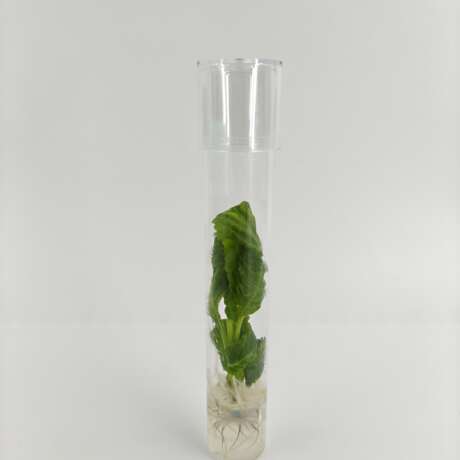
Salvia Divinorum cutting ex vitro
€ 49,99
The genus name, Salvia, was first used by Pliny for a plant that was likely Salvia officinalis (common sage) and is derived from the Latin salvere. The specific epithet, divinorum, was given because of the plant’s traditional use in divination. It is often loosely translated as “diviner’s sage” or “seer’s sage”. Albert Hofmann, who collected the first plants with Gordon Wasson, objected to the new plant being given the name divinorum: “I was not very happy with the name because Salvia divinorum means ‘Salvia of the ghosts,’ whereas Salvia divinatorum, the correct name, means ‘Salvia of the priests’.” It is now in the botanical literature under the name Salvia divinorum due to priority rules.
Additional information
1000 in stock (can be backordered)
Guaranteed safe checkout


Description
Description
The genus name, Salvia, was first used by Pliny for a plant that was likely Salvia officinalis (common sage) and is derived from the Latin salvere. The specific epithet, divinorum, was given because of the plant’s traditional use in divination. It is often loosely translated as “diviner’s sage” or “seer’s sage”. Albert Hofmann, who collected the first plants with Gordon Wasson, objected to the new plant being given the name divinorum: “I was not very happy with the name because Salvia divinorum means ‘Salvia of the ghosts,’ whereas Salvia divinatorum, the correct name, means ‘Salvia of the priests’.” It is now in the botanical literature under the name Salvia divinorum due to priority rules.
There are many common names for Salvia. divinorum, including sage of the diviners, ska maría pastora, seer’s sage, yerba de la pastora, simply salvia, and colloquially sally-d and magic mint.
Salvia divinorum is native to the Sierra Mazateca in Oaxaca, Mexico, where it is still used by the Mazatec, primarily to facilitate shamanic visions in the context of curing or divination. Salvia divinorum is one of several plant species with hallucinogenic properties that are ritually used by Mazatec shamans. In their rituals, the shamans use only freshly harvested Salvia divinorum leaves. They see the plant as an incarnation of the Virgin Mary, and begin the ritual with an invocation to Mary, Saint Peter, the Holy Trinity, and other saints. Ritual use traditionally involves being in a quiet place after ingestion of the leaf—the Maztec shamans say that “La Maria (Salvia divinorum) speaks with a quiet voice.”
It is also used in smaller amounts, as a diuretic, and to treat ailments including diarrhea, anemia, headaches, rheumatism, and a semi-magical disease known as panzón de borrego, or a swollen belly (literally, “lamb belly”).
The history of the plant is not well known, and there has been no definitive answer to the question of its origin. Speculation includes Salvia divinorum being a wild plant native to the area; a cultigen of the Mazatecs; or a cultigen introduced by another Indigenous group. Botanists have also not been able to determine whether it is a hybrid or a cultigen.
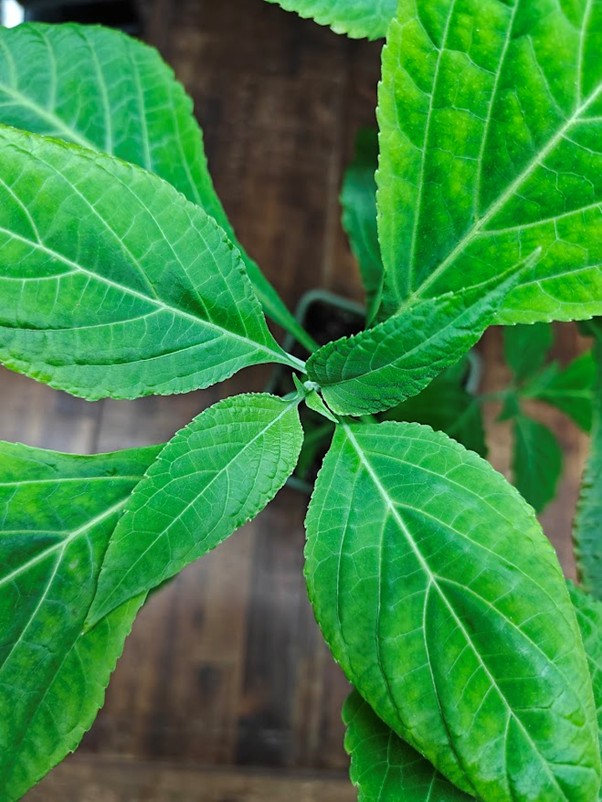
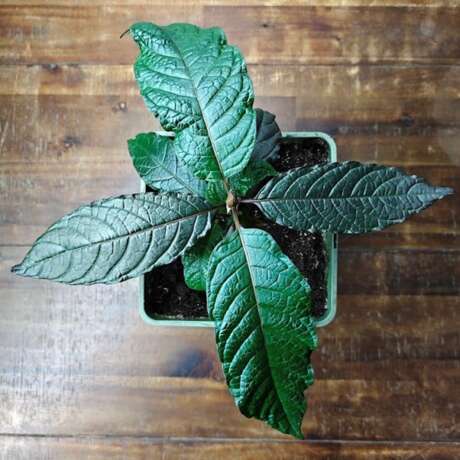
Salvia divinorum has large green ovate (often also dentate) leaves, with a yellow undertone that reach 10 to 30 cm long. The leaves have no hairs on either surface, and little or no petiole. The plant grows to well over 1 meter in height, on hollow square stems which tend to break or trail on the ground, with the plant rooting quite readily at the nodes and internodes.
The flowers, which bloom only rarely, grow in whorls on a 30-centimetre inflorescence, with about six flowers to each whorl. The 3-centimeter flowers are white, curved and covered with hairs, and held in a small violet calyx that is covered in hairs and glands. When it does bloom in its native habitat, it does so from September to May.
Specifications
- Lorem ipsum dolor sit amet
- Praesent vitae justo id velit
- Duis sed nisi rhoncus, fringilla turpis

Reviews
There are no reviews yet.