

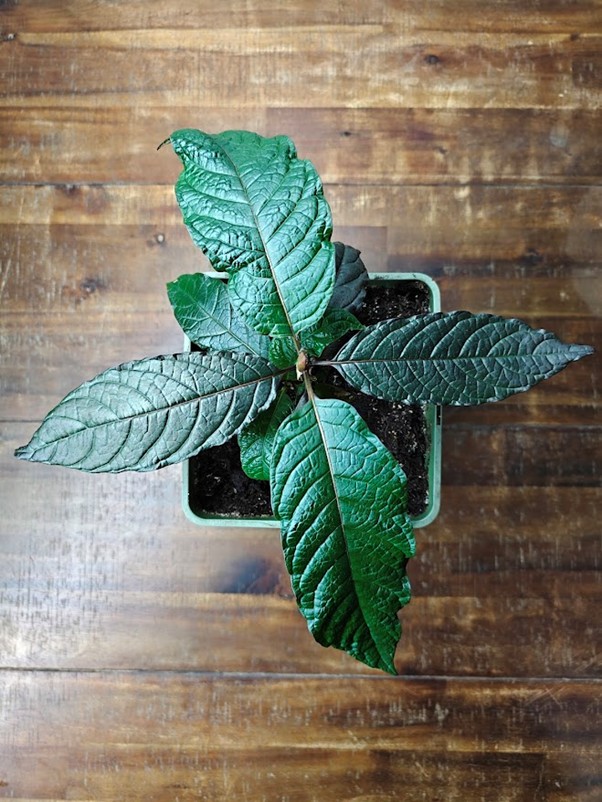
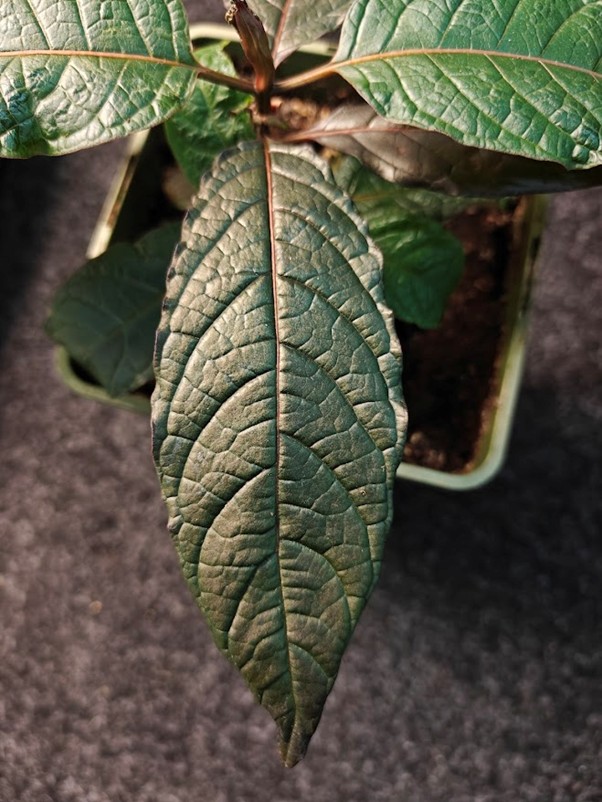
Kratom Bai Po (Mitragyna speciosa) ex vitro
€ 79,99
Mitragyna speciosa is an evergreen tree in the genus Mitragyna that can grow to a height of 25 meter. Its trunk may grow to a 0.9 meter diameter. The trunk is generally straight, and the outer bark is smooth and grey. The leaves, ovate-acuminate in shape and opposite in growth pattern, are dark green, glossy on their upper surfaces, and can grow to over 14–20 cm long and 7–12 cm wide. They have 12 to 17 pairs of veins. The spherical inflorescences, which are deep yellow, grow in clusters of three at the ends of the branches. The calyx-tube is 2 mm long and has five lobes; the corolla-tube is 2.5–3 millimeters long.
Additional information
Available on backorder
Guaranteed safe checkout


Description
Description
Mitragyna speciosa is an evergreen tree in the genus Mitragyna that can grow to a height of 25 meter. Its trunk may grow to a 0.9 meter diameter. The trunk is generally straight, and the outer bark is smooth and grey. The leaves, ovate-acuminate in shape and opposite in growth pattern, are dark green, glossy on their upper surfaces, and can grow to over 14–20 cm long and 7–12 cm wide. They have 12 to 17 pairs of veins. The spherical inflorescences, which are deep yellow, grow in clusters of three at the ends of the branches. The calyx-tube is 2 mm long and has five lobes; the corolla-tube is 2.5–3 millimeters long.
Mitragyna speciosa is indigenous to Thailand, Indonesia, Malaysia, Myanmar, and Papua New Guinea. It was first formally described by the Dutch colonial botanist Pieter Korthals in 1839, who named it Stephegyne speciosa; it was renamed and reclassified several times before George Darby Haviland provided the final name and classification in 1859.
In cultures where the plant grows, kratom has been used in traditional medicine. The leaves are chewed to relieve musculoskeletal pain and increase energy, appetite, and sexual desire in ways similar to khat and coca. The leaves, or extracts from them, are used to heal wounds and as a local anesthetic. Extracts and leaves have been used to treat coughs, diarrhea, and intestinal infections. They are also used as intestinal deworming agents in Thailand.
Kratom is often used by workers in laborious or monotonous occupations to stave off exhaustion and as a mood-enhancer and painkiller. In Thailand, kratom was “used as a snack to receive guests and was part of the ritual worship of ancestors and gods”. The herb is bitter and is generally combined with a sweetener.
Specifications
- Lorem ipsum dolor sit amet
- Praesent vitae justo id velit
- Duis sed nisi rhoncus, fringilla turpis
Reviews
There are no reviews yet.